When In Drought
Growing feed crops for animal agriculture uses up a tremendous amount of water.
By Keith Iding, Northwest VEG Board Member
The earth's surface is about 1/3 land and 2/3 water. Of that land, about 3/4 is considered habitable, and of that, half is used for agriculture. Of that half, over 3/4 is dedicated to raising livestock for meat and dairy, meaning all land used for grazing and for growing animal feed.
The amount of planetary freshwater which comes to land by way of collected rain has remained fairly consistent for thousands of years. However, since the rise of agriculture and human population, we are using an ever increasing volume. According to the UN, in the past century water use has grown at more than twice the rate of population increase. Within this decade, two thirds of our world population will be plagued by water scarcity, living in water-stressed regions as a result of use, growth, and climate change.
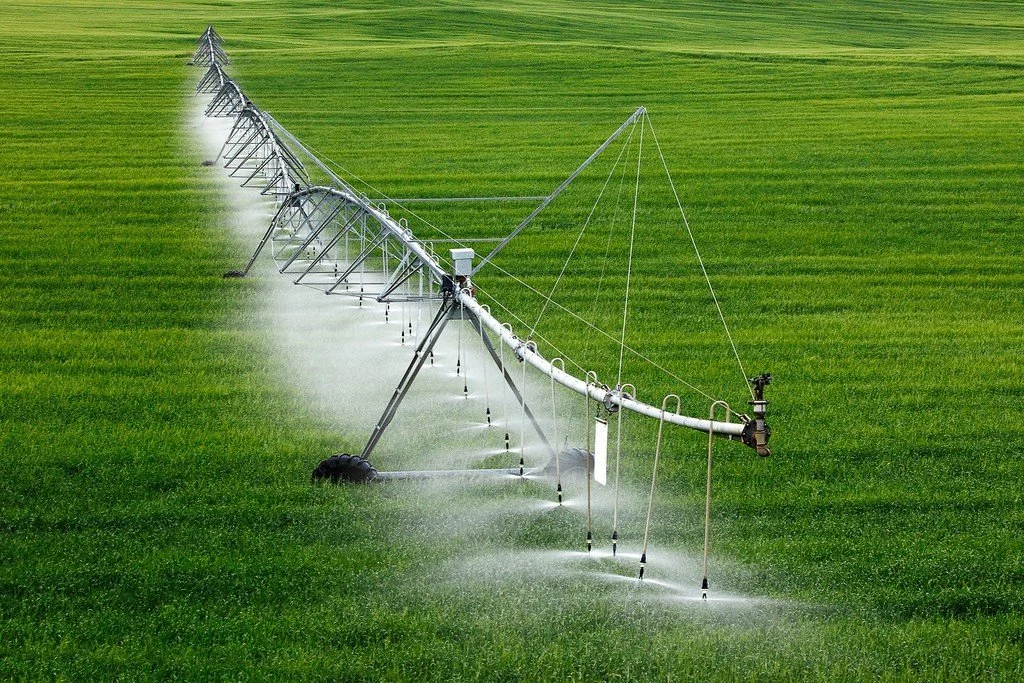
Visualize a slide presentation: We open on a vast green field of hay under an open sun, with a huge irrigation pipe on wheels moving across the image, spraying water onto a crop of alfalfa. Despite the fact that the southwestern US is experiencing ever increasing drought, western states have played key roles in alfalfa’s historical development, leading to its current status as the nations’ 4th largest commodity. In most of the western states, alfalfa is either the first, second, or third most important crop, according to USDA figures. Here in Oregon, although the top commodity is nursery stock, the next 3 in order are cattle, hay and milk, worth about half a billion dollars each, annually. Hay is considered our state’s 2nd ranked crop, and surprisingly over half of the hay grown here is sold to China. The same is true of other western states, such as California and Arizona, that find their water supply dwindling due to drought brought on by climate change. Forage crops are grown because their value keeps rising. The Saudi dairy industry owns many thousands of acres of Arizona land on which they grow alfalfa because they obtained the water rights with the land. They can’t grow the crops at home because their water sources dried up.
Next slide: An elderly couple standing outside their rural Eastern Oregon residence are explaining how their well recently ran dry, while an alfalfa farming operation across the road is still pumping from the same underground source but from a greater depth. Ancient aquifers are running dry, with little hope of replenishment. The ever-growing market for alfalfa and hay are considered a gold rush for others eager to cash in on the booming market, but is about to hit the end of sustainability. What will become of all the communities in these areas when the water runs out?
The reason for this focus on hay is because it is a crop which serves no purpose but to support raising animals. We can’t eat the hay, but it’s the best we can offer to the nearly 100 million cattle being raised as our food supply. Humans and livestock now account for 96 percent of the earth’s entire mammal biomass. Meanwhile, the conversion factor for protein from cattle is at least 10:1 of what goes into the animal vs what is produced. Have you noticed in driving across our vast countryside that hay is growing everywhere? The national output is well over 50 million acres. Hay is one of the most thirsty crops, using even more water per acre than almonds. While California produces nearly 80% of the world’s almonds, the tremendous area dedicated to alfalfa only feeds 2% of the world’s beef.
Raising livestock is the single largest land use of anything we do. This is not just about “grazing lands.” Hundreds of millions of acres of the best farmland, which we call the “breadbasket of the nation,” are taken by raising GMO animal feed crops, primarily corn and soybeans. That national 50 million acres of hay, notably including the participation of many western states, all goes to feed livestock. Forage commodities are very thirsty and require vast irrigation systems in areas where water is a rapidly shrinking life support necessity. The combined feed crops also represent the largest use of fertilizer, herbicides and pesticides which, along with vast quantities of untreated animal waste greatly disproportionate to human sewage, drain into our major waterways like the Mississippi River, and then cause vast dead zones off our coastlines, such as in the Gulf of Mexico.
Our support of animal agriculture is very costly in terms of land and water resources, and ethically wrong to exploit other sentient beings as prisoners of a misguided economic system. Taxpayer money is being squandered to subsidize a corporate welfare system that diverts nearly $50 billion annually to artificially prop up meat and dairy as cheap foods and keep unsustainable production in place. Both sides of the political aisle are looking to increased meat exports as the core of the future US economy without regard to the unacceptable impacts on a dying planet.
Contact Keith Iding for a list of references used for this article.