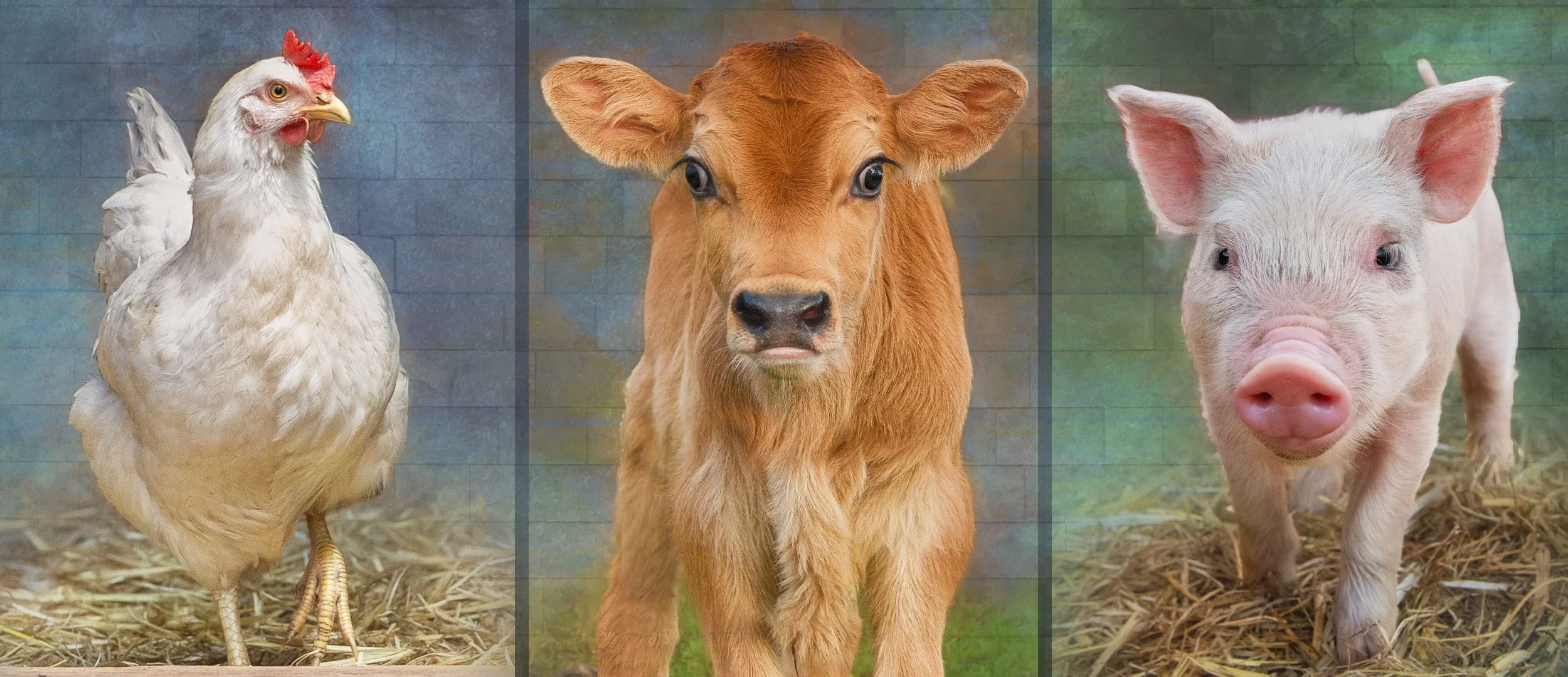
Image by Beth Lily Redwood
REJECT EATS ACT LANGUAGE IN THE HOUSE FARM BILL
The U.S. House of Representatives included regressive and dangerous language from the EATS Act in their framework for the Farm Bill. If this policy becomes law, it will undermine states’ efforts to address the harms of factory farming, threatening the well-being of animals, people, and the planet. The EATS Act would undermine states’ ability to enact laws affecting agricultural practices, jeopardizing numerous state-level farmed animal protection laws. Northwest VEG is urging our readers to contact their congressional representatives to defeat this harmful legislation.
In more than a dozen states across the U.S., voters and legislators have passed laws protecting farmed animals from some of the most egregious cruelty in the factory farming industry: intensive confinement in systems such as gestation crates, veal crates, and battery cages. Other states are currently considering similar legislation.
Federal lawmakers introduced a bill that would likely jeopardize these humane reforms. The bill, known as the Ending Agricultural Trade Suppression (EATS) Act ( H.R. 4417/ S. 2019), could strip states and localities of their right to impose standards or conditions on the production or manufacturing of agricultural products sold or offered for sale in interstate commerce when those standards differ from federal law or the laws of other states. Although the original bill is dead, the U.S. House of Representatives Agricultural Committee has introduced the harmful language from the EATS Act into the current version of the U.S. Farm Bill - which is must-pass legislation. This language needs to be removed.
If the Farm Bill becomes law with this dangerous language included, years’ worth of legislative victories for farmed animals at the state level could be imperiled. If passed, laws in Oregon and Washington banning the confinement of hens in cruel battery cages could be nullified, as well as Oregon’s banning of gestation crates for pigs. The bill’s broad language could also jeopardize state laws that, for example, are designed to protect dogs from the cruelty of puppy mills, promote food and food packaging safety, protect rural communities, and preserve our environment.
The EATS Act language in the Farm Bill is similar to legislation in previous sessions of Congress that came to be known as the “King Amendment,” named after its sponsor, then-Representative Steve King of Iowa. A broad coalition of advocates for animal protection, food safety, consumer protection, environmental preservation, and rural communities, as well as small farmers, staunchly opposed the King Amendment and helped ensure its defeat in both 2014 and 2018. It’s critical that animal advocates help get this EATS Act language as well.
YOUR ACTION IS NEEDED TO HELP DEFEAT A DANGEROUS BILL!
Urge your Representative to respect the will of voters and court rulings and reject the inclusion of the EATS Act language in the House Farm Bill. Landmark farmed animal protection laws — such as California’s Proposition 12, which addresses the cruelest forms of animal confinement on factory farms — could be invalidated should this bill become law.
Please take action today to urge your lawmakers to oppose this dangerous bill! Go to https://secure.farmsanctuary.org/action/stop-eats-act-now, where you’ll find a sample message you can send, but remember, personalized messages are the most effective.
Visit the Animal Legal Defense Fund’s site to learn more about the issues farmed animals face on industrial farms and to learn more about the EATS Act. This article contains excerpts from the Animal Legal Defense Fund and Farm Sanctuary.