
We have a real treat following the Northwest VEG Westside vegan potluck in October. Scott Hoffman Black has been at the forefront of the conservation movement for over three decades. He is executive director of the Xerces Society, which under his leadership has become the largest invertebrate conservation non-profit in the world. Scott’s work has led to protection and restoration of habitat on millions of acres of rangelands, forests, and farmland as well as protection for many endangered species. Scott will be giving a fascinating presentation on the importance of insects in preserving our natural environment and how they are an important factor in addressing the environmental issues facing all life on Earth.
Come to the potluck at 5 pm, Scott's presentation at 6:15, or both. If you come for the potluck, please bring a plant-based (no meat, eggs, dairy, or other animal products, including honey) main dish, salad, or dessert; a card listing its ingredients; and plates and utensils for your use. If you come alone, figure the amount to serve 4-6; increase the amount 4 servings for each additional person in your party/family.
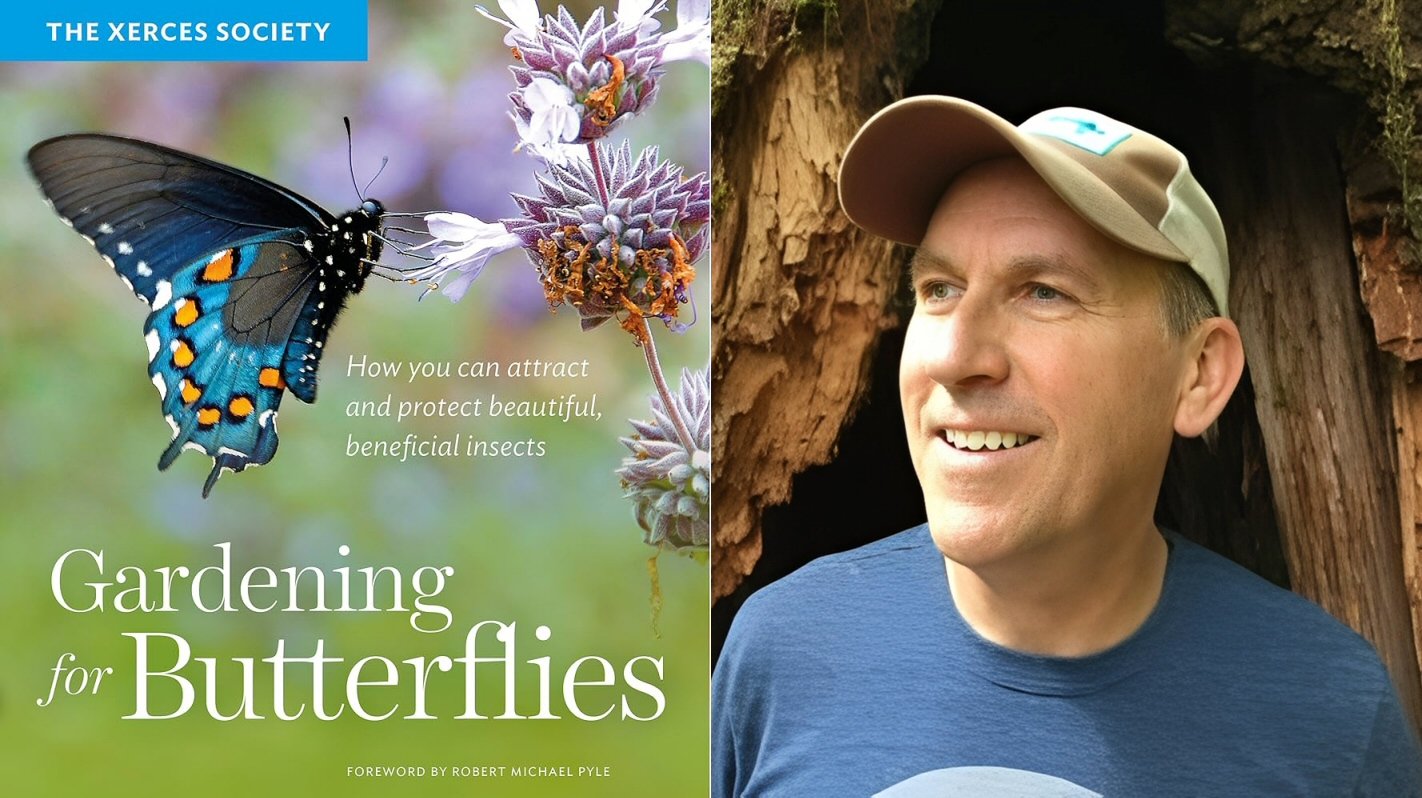
Scott Hoffman Black, Executive Director of the Xerces Society, the leading organization in the world for invertebrate conservation.
You can thank insect pollinators for one third of every mouthful of food that you eat.
Without small flies in streams for young fish to eat – we wouldn’t have salmon returning to Oregon’s rivers year after year.
If you like songbirds, you can thank an insect – 96 percent of birds rely on insects for survival.
With well over one million known species, insects and other invertebrates eclipse all other forms of life on Earth. They are essential to the reproduction of most flowering plants, including many fruits, vegetables, and nuts; they are food for birds, fish, and other animals; they filter water and help clean rivers and streams; and they clean up waste from plants and animals. Just four of the many insect services—dung burial, pest control, pollination, and wildlife nutrition—have an estimated annual value in the United States alone of at least $70 billion.
Though they are indisputably important, insects and other invertebrates are experiencing a multicontinental crisis evident as reductions in abundance, diversity and biomass. Given the centrality of insects to terrestrial and freshwater aquatic ecosystems and the food chain that supports humans, the potential importance of this crisis cannot be overstated.
The loss of insect diversity is driven by habitat loss and degradation, pesticide use, climate change, diseases and more. The science is clear: It is impossible to address the loss of biodiversity without addressing climate change, but equally impossible to tackle the full impacts of climate change without working to protect and enhance biodiversity. Scott will discuss how nature-based solutions can address both.
Scott Black is an author of the best-selling Attracting Native Pollinators and Gardening for Butterflies and has written more than two hundred other publications. His work has been honored with several awards, including the 2011 Colorado State University College of Agricultural Sciences Honor Alumnus Award, the U.S. Forest Service Wings Across the Americas 2012 Butterfly Conservation Award and the 2019 Wings Across the Americas International Research Partnership Award and a 2020 Natures Choice Award from the Greater Good Foundation.
Scott serves on the advisory council of the Center for Regenerative Solutions which is accelerating the implementation of regenerative, nature-based climate solutions in cities and also serves on the Trinational Monarch Science Partnership – a partnership of federal agencies and scientists from Mexico, the United States, and Canada which works to understand and conserve monarch butterflies across North America.